
A garage door that suddenly stops working is more than an inconvenience. In Phoenix, where summer heat regularly pushes past 110 degrees and monsoon dust storms roll through in late summer, a door stuck open leaves a home exposed to extreme heat, dust, and anyone passing by. A door stuck shut can trap a car inside when someone needs to get to work or school.
Most garage door failures give warning signs first. Others happen without warning at all. Either way, knowing which problems count as emergencies — and which ones can wait a day — helps homeowners in Phoenix, Mesa, Gilbert, and Chandler act fast and stay safe.
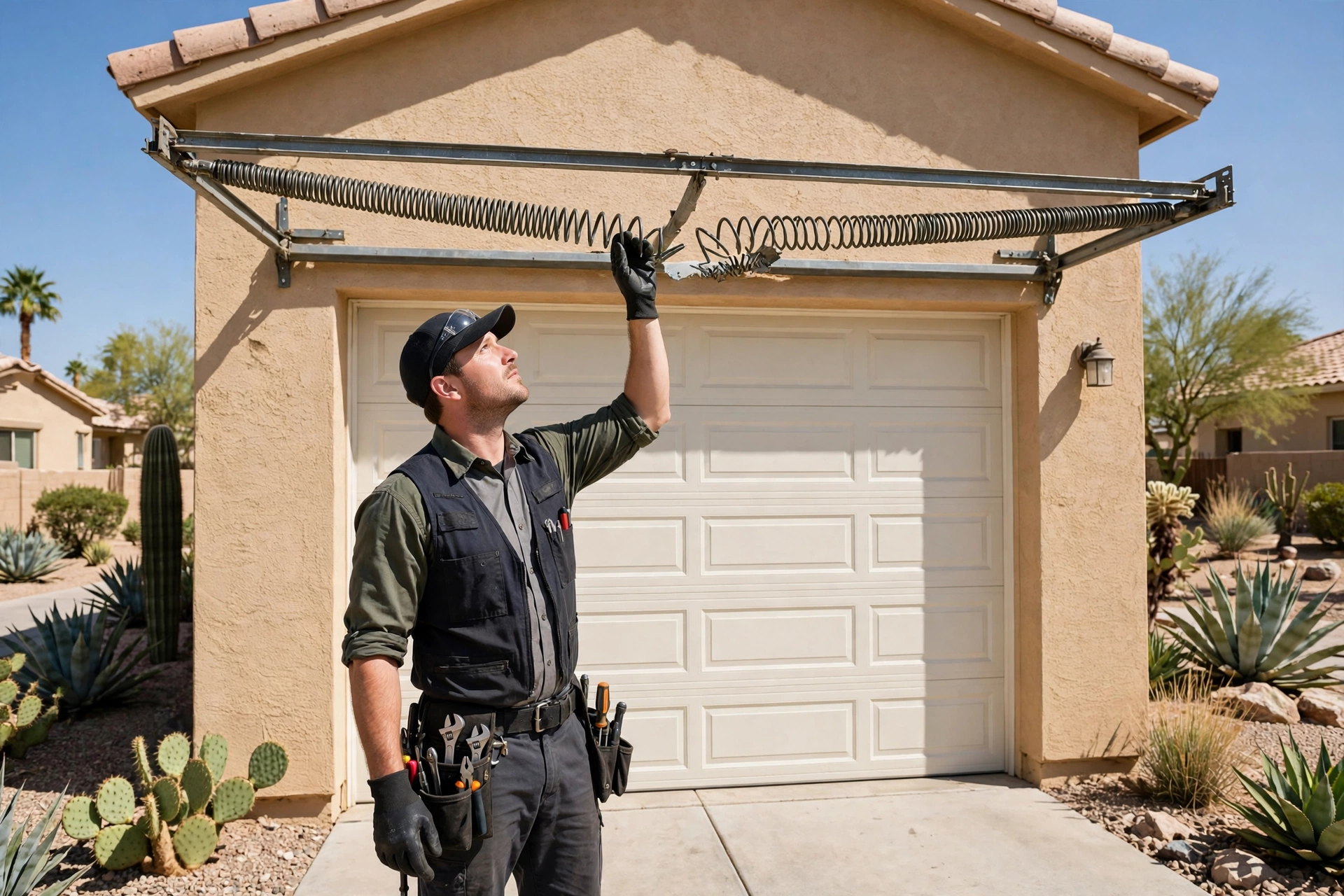
Sign 1: A Broken Spring
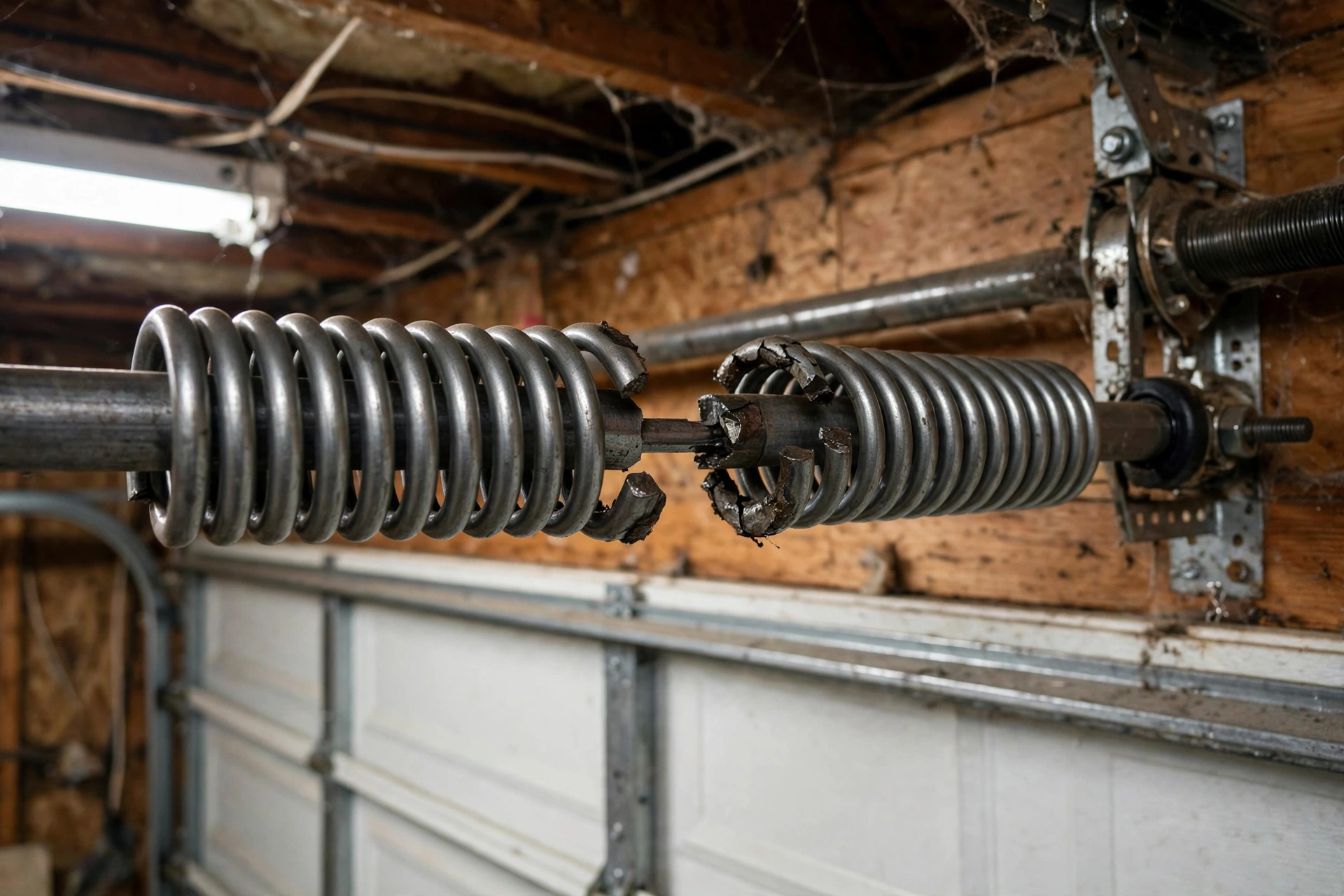
The torsion spring above the door does the heavy lifting. When it snaps, the door becomes far too heavy to lift by hand, and the opener cannot move it either. A loud bang from the garage is often the first clue, followed by a visible gap in the coiled spring.
This is one repair that should never be attempted at home. Torsion springs store an enormous amount of tension, and a slip during handling can cause serious injury. If the spring is broken, stop using the door and call for a pro right away.
Sign 2: The Door Is Stuck Halfway
A door that stops mid-travel — or hangs crooked with one side higher than the other — is an emergency. It usually points to a broken cable, a bent track, or a failed spring on one side. Forcing the door up or down can bend the panels, damage the track further, or cause the door to drop suddenly.
Leave the door where it is. Do not try to push it open or closed, and keep children and pets away from it until a local pro has looked at it.
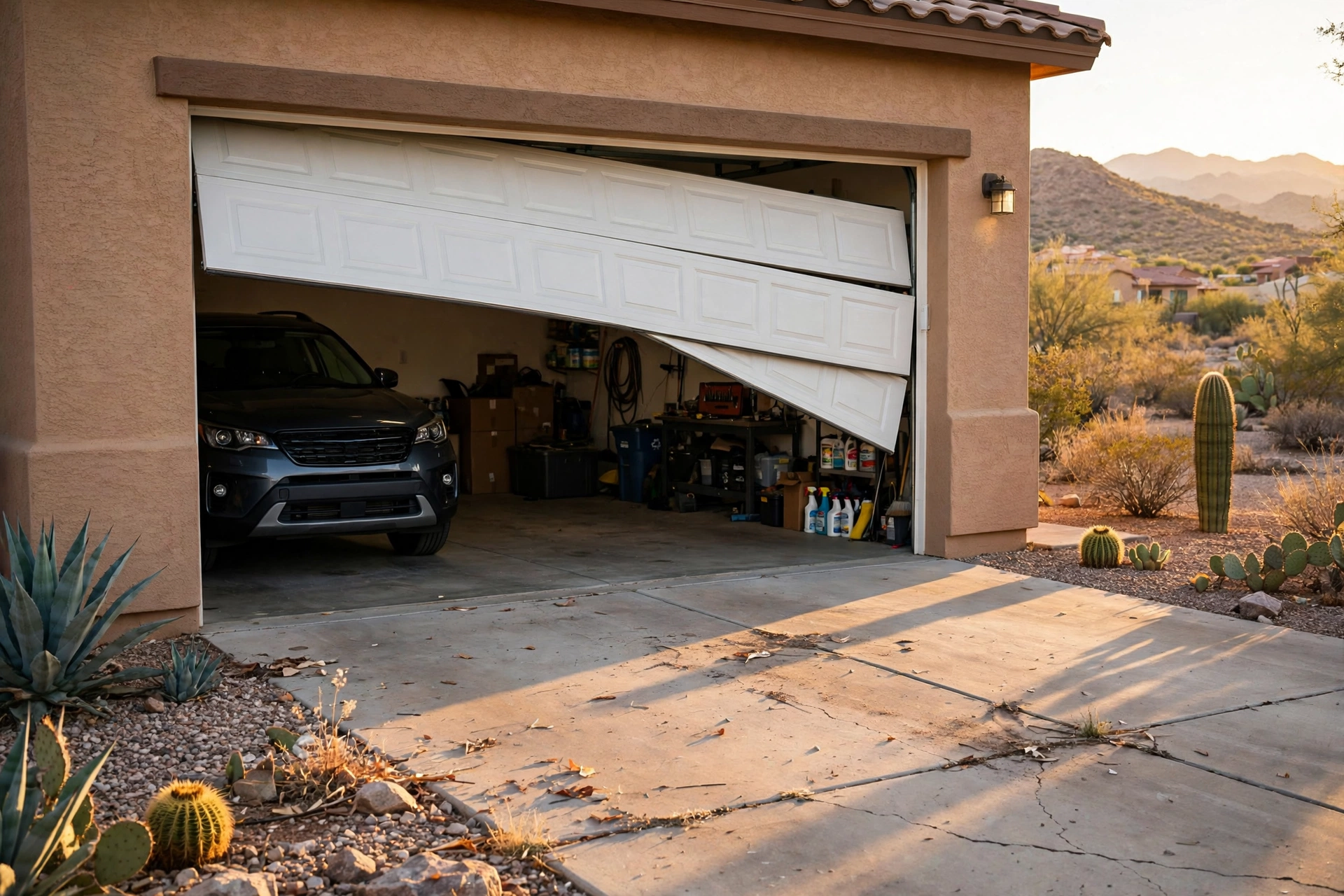
Sign 3: The Door Fell or Slammed Shut
A garage door that drops fast instead of lowering smoothly has lost the tension that controls its movement. This is dangerous. A falling door can damage a car, crush anything underneath it, and injure anyone nearby.
If the door has fallen, do not try to lift it back into place. Disconnect the opener only if it is safe to reach the emergency release cord, then keep the area clear and get help the same day.
Sign 4: The Opener Is Completely Dead
When the opener does nothing at all — no light, no sound, no movement — the problem may be a tripped breaker, a failed circuit board, or a burned-out motor. First, check the breaker panel and make sure the opener is plugged in. If power is reaching the unit and it still does nothing, the opener itself likely needs professional attention.
A dead opener matters most when the door is closed with a car inside, or open with the home exposed. In Phoenix heat, an open garage can turn a home’s interior into an oven within hours.
Sign 5: Loud Grinding, Banging, or Popping Noises
Garage doors make some noise, but sudden grinding, banging, or sharp popping sounds mean something has broken or come loose. Common causes include a snapped cable, a stripped opener gear, or a roller that has come out of its track.
Turn the opener off and stop using the door. Continued use after these sounds appear can turn a small repair into a much bigger one — or cause the door to come off its track entirely.
Sign 6: The Door Will Not Stay Closed
A door that opens again on its own, or refuses to stay down, is a security problem. It may be a misaligned safety sensor, a faulty limit setting, or a damaged opener. Whatever the cause, a door that will not close leaves a home wide open overnight.
Check that nothing is blocking the sensors near the floor and wipe the sensor lenses clean. If the door still will not stay closed, treat it as an emergency and get a pro out the same day.
Sign 7: Visible Damage After a Storm or Impact
Monsoon season in the Valley can bring high winds, flying debris, and heavy rain. A door that has been hit by debris, backed into by a car, or bent by wind may look usable but be structurally unsafe. Bent tracks, cracked panels, and loose hinges can all fail without warning.
After any impact or storm damage, inspect the door from a safe distance. If panels are bent, the track is twisted, or the door moves unevenly, do not operate it. A local pro can judge whether the door can be repaired or needs to be secured until parts arrive.
What to Do Right Now
If the garage door is stuck open, keep the home secure by locking the door between the garage and the house. If the door is stuck closed with a car inside, use the emergency release cord to lift it manually only if the door moves freely and feels balanced — if it feels extremely heavy or drops, let it down gently and wait for help.
Avoid the temptation to fix springs, cables, or tracks yourself. These parts are under high tension and are the leading cause of garage door injuries. A trained local pro has the right tools and knows how to release that tension safely.
What a Pro Visit Looks Like
When a local pro arrives for an emergency garage door repair in Phoenix, the visit usually starts with a full inspection: springs, cables, rollers, tracks, sensors, and the opener. The pro will explain what failed, what needs to be fixed to make the door safe, and what can wait.
Most emergency visits focus on getting the door working safely again the same day. Homeowners can ask for an upfront written quote before any work begins, and should ask what is covered if the same problem comes back.
Frequently Asked Questions
Can I open my garage door manually if the spring is broken?
It is not safe to try. A door with a broken spring can weigh well over a hundred pounds and may drop suddenly. Wait for a pro.
How fast can emergency garage door repair happen in Phoenix?
It depends on the day and the problem, but many local pros offer same-day service for doors that are stuck open, off track, or will not close. Calling early in the day usually helps.
Is a noisy garage door an emergency?
A door that suddenly gets much louder — grinding, banging, or popping — should be treated as urgent. Stop using it and have it checked before something breaks completely.
What should I do if my garage door will not close at night?
First, check the sensors for dirt or misalignment. If that does not fix it, lock the interior door, keep valuables out of sight, and call a pro first thing in the morning — or the same night if the door is wide open.
Need Help Now?
A garage door emergency in Phoenix cannot wait — an open door is a security risk, and a stuck door can trap a car when it matters most. Call Now and get connected with an independent local pro in your area, or reach out through the contact page to arrange a visit.
Need help now? Call Now and we’ll connect you with an independent local pro in your area.