
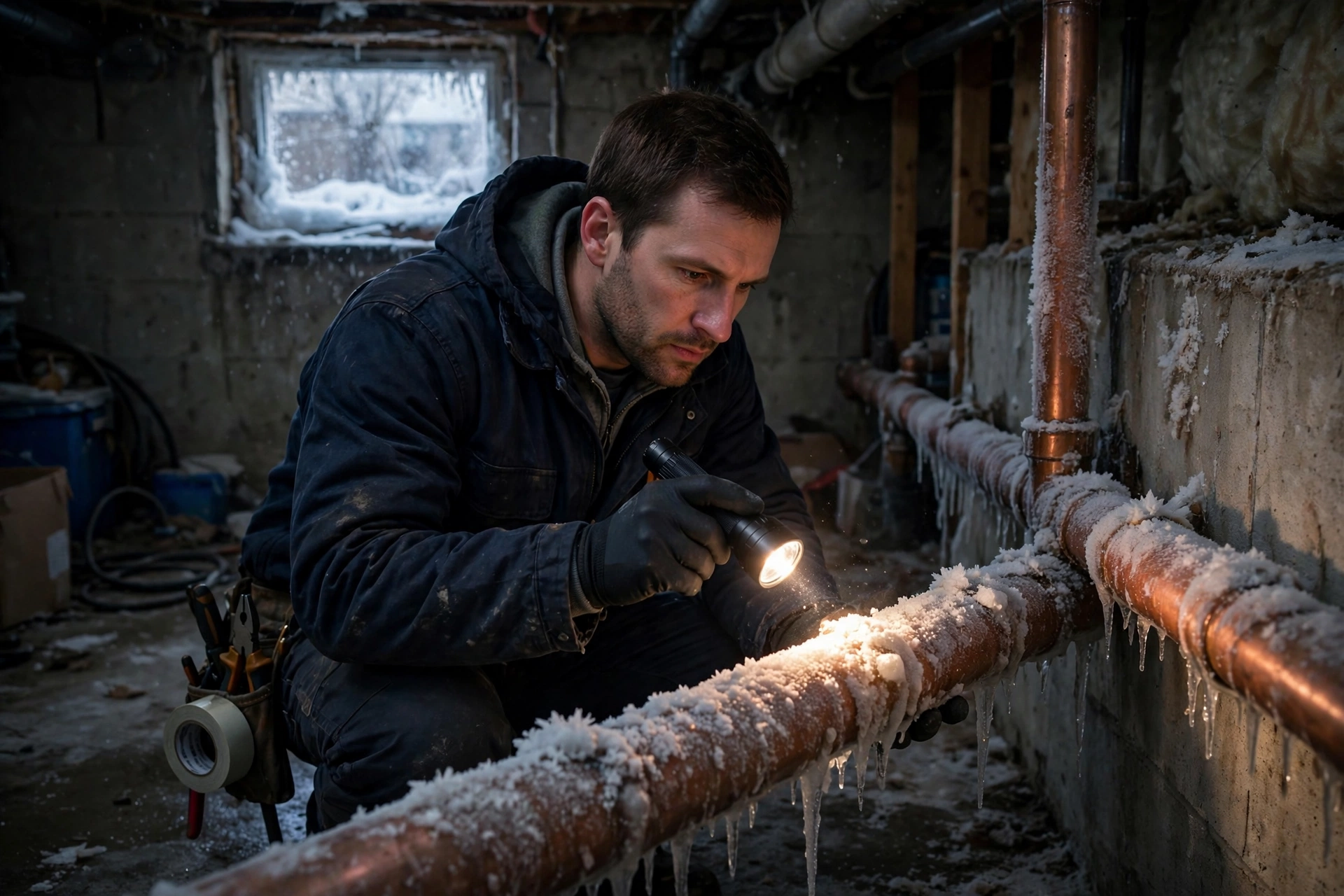
Buffalo winters do not mess around. Lake-effect snow, wind off Lake Erie, and long stretches of below-freezing nights put every home’s plumbing under real stress. When water inside a pipe freezes, it expands — and that pressure can split copper, crack PVC, and flood a basement, kitchen, or wall cavity in minutes once the ice thaws.
The good news is that frozen pipes almost always send warning signs before they burst. Catching those signs early is the difference between a quick professional repair and a flooded home. Here are seven signs Buffalo homeowners should watch for, what to do right away, and when to bring in a local pro.
1. Little or No Water From a Faucet
The most common first sign of a frozen pipe is a faucet that barely trickles — or gives nothing at all — when you turn it on. If other faucets in the house still run normally, the frozen section is likely on the line feeding that one fixture.
Check whether the problem affects hot water, cold water, or both. A frozen hot-water line points toward the water heater feed; a frozen cold-water line could be anywhere along the supply run. Either way, do not force the faucet handle or crank it wide open — leave it slightly open instead, so water has somewhere to go when the ice starts to melt.
2. Strange Smells From a Drain or Faucet
A frozen pipe can trap water and debris in place, and the result is often an odd, musty, or stale smell coming from a sink, tub, or faucet. The smell alone does not prove a freeze, but in a Buffalo winter — especially after a cold snap — it belongs on the watch list alongside the other signs here.
If the smell appears together with slow drainage or low pressure, treat it as a likely freeze and act on the steps below rather than waiting to see whether it clears on its own.
3. Frost or Ice on Exposed Pipes
Take a look at the pipes you can see: in the basement, crawl space, garage, or under a kitchen sink on an exterior wall. Visible frost, ice crystals, or a white, chalky coating on a pipe is a direct warning that the water inside is at or below freezing.
Pipes running through unheated spaces are the usual suspects. In Buffalo homes, that often means the basement rim joist area, an uninsulated garage wall, or the pipes feeding an outdoor spigot. A pipe that looks frosted on the outside is already in trouble — it needs attention before the next overnight freeze makes it worse.
4. Bulging, Cracked, or Sweating Pipes
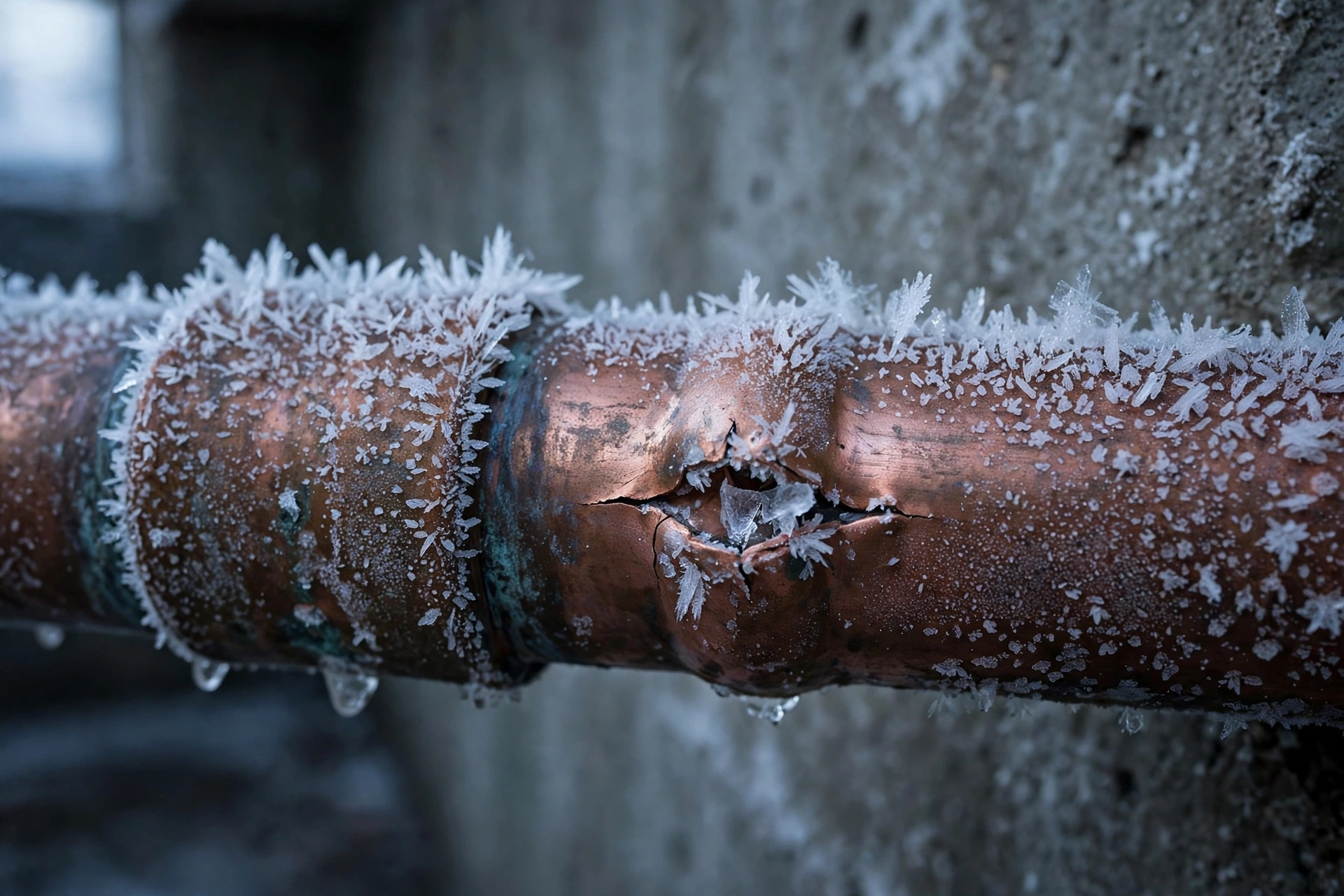
Ice expands, and a pipe can only stretch so far. A visible bulge, a hairline crack, or a seam that looks swollen is a sign that freezing water is already pushing the pipe past its limit. Even a small crack can turn into a major leak the moment temperatures rise and the ice plug melts.
Water beading or “sweating” on a pipe in an otherwise dry, cold space can also signal trouble, especially if it appears on only one section of pipe while the rest stays dry. Do not poke, squeeze, or tap a bulging pipe — any extra pressure can finish the job the ice started.
5. Gurgling, Banging, or Whistling Sounds
Listen to your plumbing on a cold morning. Gurgling drains, a sharp bang when a faucet shuts off, or a faint whistle when water runs can all point to ice narrowing the inside of a pipe. The sounds happen because water is squeezing past a partial blockage or because pressure is building behind a frozen section.
These noises are easy to dismiss as “just the house settling,” but during a Buffalo cold snap they deserve a closer look. If the sounds are new, getting louder, or paired with low water pressure, the pipe is telling you something.
6. A Sudden Spike in the Water Bill
A frozen pipe that has already cracked can leak quietly inside a wall or under a floor for days before anyone notices a puddle. One of the earliest clues is a water bill that jumps for no clear reason.
If the bill is up and no one in the household has changed their water habits, check the water meter: turn off every faucet and water-using appliance, then watch the meter. If it keeps moving, water is going somewhere it should not be. That is a call-a-pro situation, not a wait-and-see one.
7. Damp Spots, Stains, or a Musty Smell in Walls and Ceilings
Water from a burst or cracked pipe does not always show up as a puddle. It often appears first as a damp patch on drywall, a yellowish stain on a ceiling, peeling paint, or a musty smell in a room that used to smell fine.
In Buffalo’s older housing stock — including many homes in North Buffalo, Elmwood Village, and the surrounding suburbs — pipes often run inside exterior walls, so a leak can soak insulation and framing long before it reaches the floor. Any new damp spot in winter should be checked the same day.
What to Do Right Away If You Suspect a Frozen Pipe
If you spot one or more of these signs, a few quick steps can limit the damage:
- Shut off the water at the main shutoff valve if you see an active leak or a burst pipe, then open the affected faucet to relieve pressure.
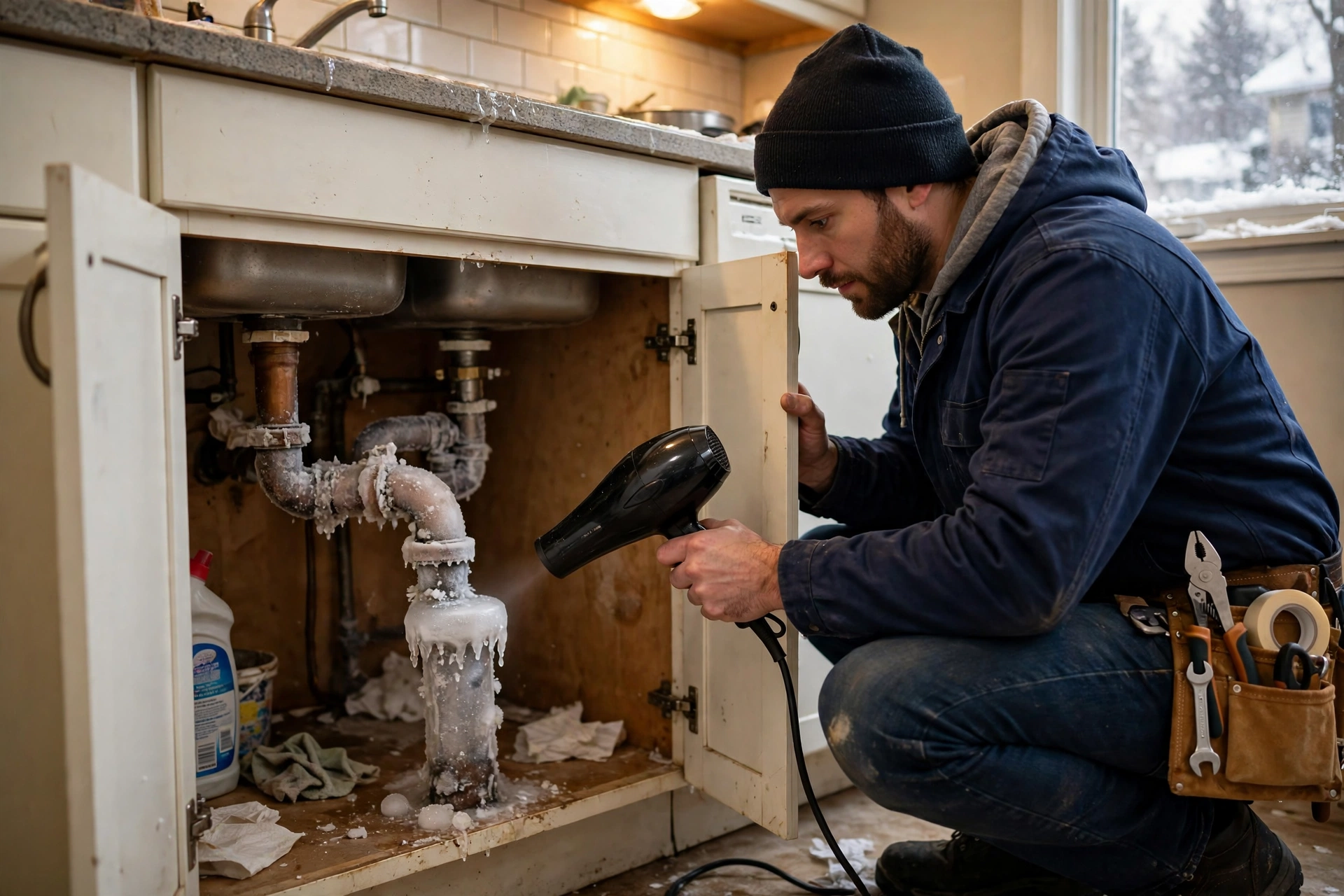
- Open cabinet doors under sinks on exterior walls so warm room air can reach the pipes.
- Turn up the heat a few degrees and keep interior doors open so warm air circulates.
- Apply gentle heat to a visibly frozen section with a hair dryer, heating pad, or warm towels — never an open flame, torch, or space heater aimed directly at a pipe.
- Leave the faucet slightly open so melting ice has a path to escape instead of building pressure.
If you cannot find the frozen section, if the pipe is already cracked, or if water is actively leaking, stop and get professional help. A licensed local pro has the tools to locate the freeze, thaw it safely, and repair or replace the damaged section before the next cold night.
What a Professional Visit Usually Covers
When a local pro comes out for a suspected frozen pipe, the visit typically starts with locating the frozen section — often with the help of a thermal camera or by tracing the line from the affected fixture. From there, the pro can thaw the pipe safely, check the surrounding joints and fittings for cracks, and repair or replace any section that has split.
The visit is also a good time to ask about prevention for the rest of the winter: insulating exposed runs, sealing drafts around the rim joist, and keeping vulnerable pipes warm during the coldest nights. A few small fixes now can save a homeowner from a repeat freeze in January or February, when Buffalo’s coldest weather usually arrives.
FAQ
Can a frozen pipe burst even if I do not see a leak yet?
Yes. A pipe often splits while the water inside is still frozen, and the leak only appears once the ice thaws. That is why a bulge, crack, or sudden pressure drop should be taken seriously even before any water shows up.
How cold does it have to be for pipes to freeze?
Pipes can start freezing when temperatures drop below 32°F, and the risk climbs sharply during extended cold snaps, especially for pipes in unheated spaces or on exterior walls. Wind chill and drafts make it worse.
Should I try to thaw a frozen pipe myself?
Gentle heat from a hair dryer or warm towels is fine for a pipe you can see and reach safely. Never use an open flame, and never apply heat to a pipe that is already cracked or leaking — that is a job for a pro.
What if only one faucet has no water?
That usually means the freeze is on the line feeding that fixture. Leave that faucet slightly open, warm the area around it, and watch the other fixtures. If the problem spreads or you find a crack, call a pro.
When to Call a Pro in Buffalo, NY
Buffalo’s winters are long, and a frozen pipe is not a problem that fixes itself. If you have spotted any of the seven signs above — no water at a faucet, frost on a pipe, strange sounds, a bulging section, a mystery damp spot, or a water bill that jumped — the smart move is to get a local pro out before the ice thaws and turns a repair into a flood.
Need help now? Call Now and we’ll connect you with an independent local pro in your area. You can also reach out through the contact page to describe the problem and get connected with a licensed plumber near Buffalo, NY.