
Orlando homeowners know the pattern well: a summer afternoon thunderstorm rolls in over Central Florida, lightning cracks across the sky, and suddenly the TV will not turn on, the Wi-Fi router is dead, or the garage door opener hums and does nothing. Florida sees more lightning than almost anywhere else in the country, and a single strike nearby can send a surge through a home’s wiring that damages anything plugged in.
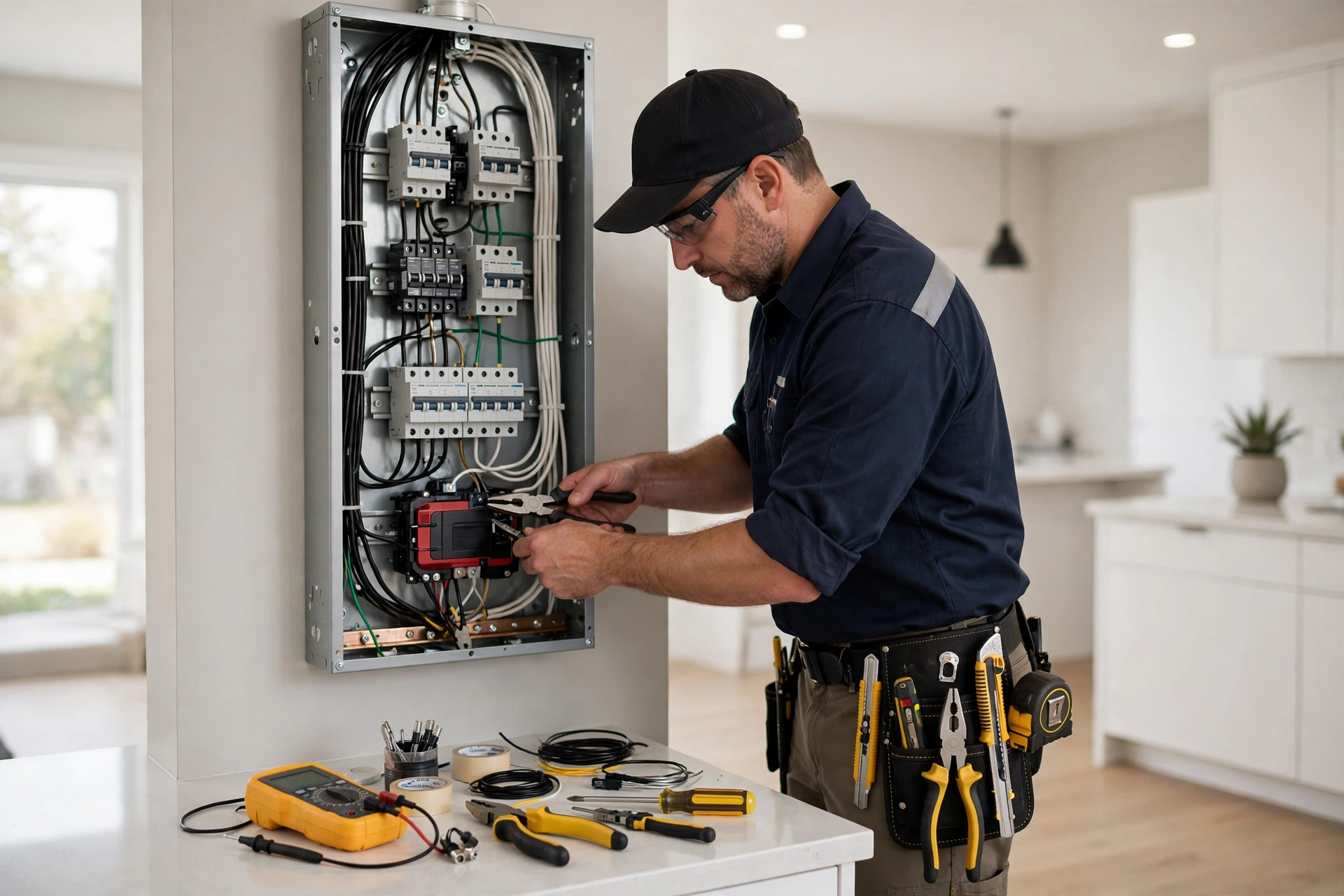
A whole-home surge protector is a device installed at the electrical panel that helps guard every circuit in the house at once. It does not replace point-of-use surge strips, but it adds a first line of defense where power enters the home. Before you schedule the work, here are seven things worth knowing.
1. What a Whole-Home Surge Protector Actually Does
A whole-home surge protector sits between the utility power coming into the house and the circuits that feed outlets, appliances, and electronics. When voltage spikes above a safe level, the device diverts the excess energy to ground instead of letting it travel through the wiring.
Think of it as a gatekeeper at the front door. A power strip protects one outlet; a whole-home unit protects the whole house. That matters in Orlando, where a strike does not have to hit the house directly — a strike on a nearby transformer or utility line can still send a surge down the service line and into the home.
No surge protector can stop every possible surge, and no device makes a home lightning-proof. What it does is reduce the risk that an everyday surge fries a refrigerator control board, a smart thermostat, or a home office setup.
2. Orlando’s Storm Season Makes the Case Stronger
Central Florida’s thunderstorm season runs roughly from late spring through early fall, and afternoon storms are a near-daily event. Lightning is the headline risk, but surges also come from utility switching, brief outages, and power coming back on after a storm knocks it out.
Homes in Orlando, Kissimmee, Winter Park, and Lake Nona all share the same exposure: warm, humid air builds powerful storms, and the grid that serves them takes regular hits. If a home has already lost a router, a TV, or an appliance control board to a storm, that is a strong hint the house could benefit from panel-level protection.
Homeowners who work from home or rely on smart-home gear have even more at stake, because a single surge can take out several devices at once.
3. The Panel Needs Space — and the Right Condition
A whole-home surge protector is usually mounted at or inside the main electrical panel, and it typically takes up two breaker spaces. Before installation, a licensed electrician checks whether the panel has room, whether the bus bars are in good shape, and whether the panel itself is in safe working order.
Older panels, panels with signs of corrosion, or panels that are already full may need attention first. In some Orlando-area homes built decades ago, the panel may be a model that is no longer supported, and an electrician may recommend a panel upgrade before adding surge protection.
This is also why a quick look at the panel before the appointment helps: note the brand on the panel door and whether any breakers look discolored or feel warm. Share that with the electrician when you call.
4. Not All Surge Protectors Are the Same
Surge protectors are rated by how much energy they can absorb and how fast they respond, and those ratings vary widely. Units designed for whole-home use are built differently from the strips sold for a desk or a TV stand.
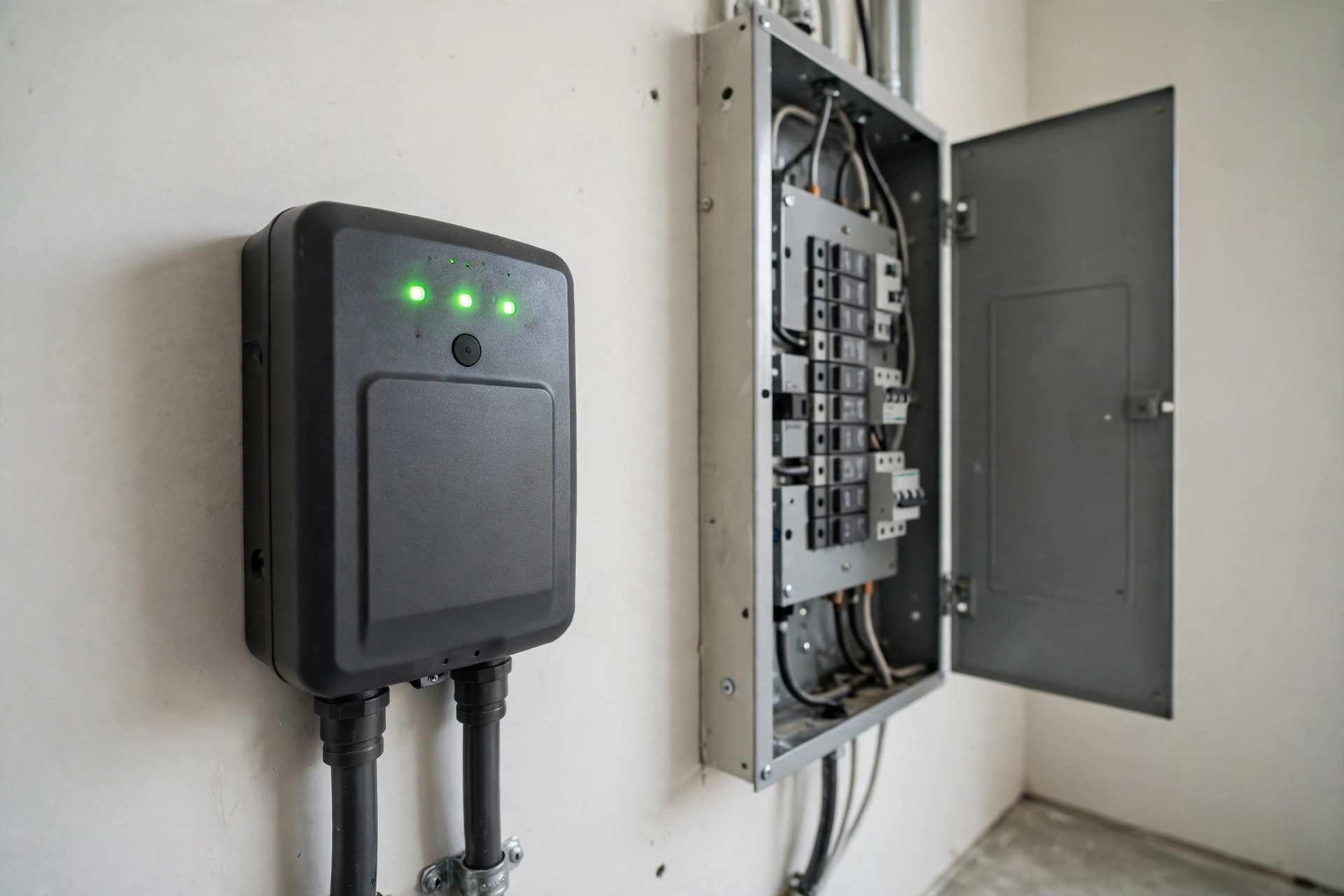
A licensed electrician can help match the right unit to the home — the size of the electrical service, the number of circuits, and the kinds of equipment in the house all play a role. Some units include indicator lights that show whether protection is still active, which is useful because a protector that has absorbed a large surge may need replacing even if everything still works.
Ask the electrician what rating the unit carries and how you will know if it ever needs to be replaced. A good installer explains this in plain language before the work starts.
5. Installation Is a Job for a Licensed Electrician
Installing a whole-home surge protector means working inside the main electrical panel, where the incoming service wires are live even when the main breaker is off. This is not a do-it-yourself project, and it is not a job for a handyman.
A licensed electrician knows how to shut down power safely, mount the device correctly, and wire it to the panel in a way that meets local code. In Orlando, electrical work must meet the Florida Building Code and local permit rules, and a licensed pro handles that side of the job.
If an installer ever suggests skipping the permit or working around the panel without shutting power down, that is a reason to find a different electrician.
6. Warning Signs Your Home May Already Have Surge Damage
Surges do not always announce themselves with a dead appliance. Sometimes the damage is quieter and shows up over time. Watch for these signs:
- Electronics that reset themselves or lose settings after a storm
- A TV, router, or computer that stopped working after a nearby lightning strike
- Lights that flicker briefly when power comes back after an outage
- Appliances that behave oddly — a dishwasher that skips cycles, a garage door opener that forgets its settings
- A burning smell near the panel or an outlet after a storm
- Breakers that trip more often than they used to
Any of these after a storm is worth mentioning to an electrician. A burning smell or a breaker that will not reset should be treated as urgent — turn off the affected circuit if you can do so safely and call for help right away.
7. What a Pro Visit Looks Like
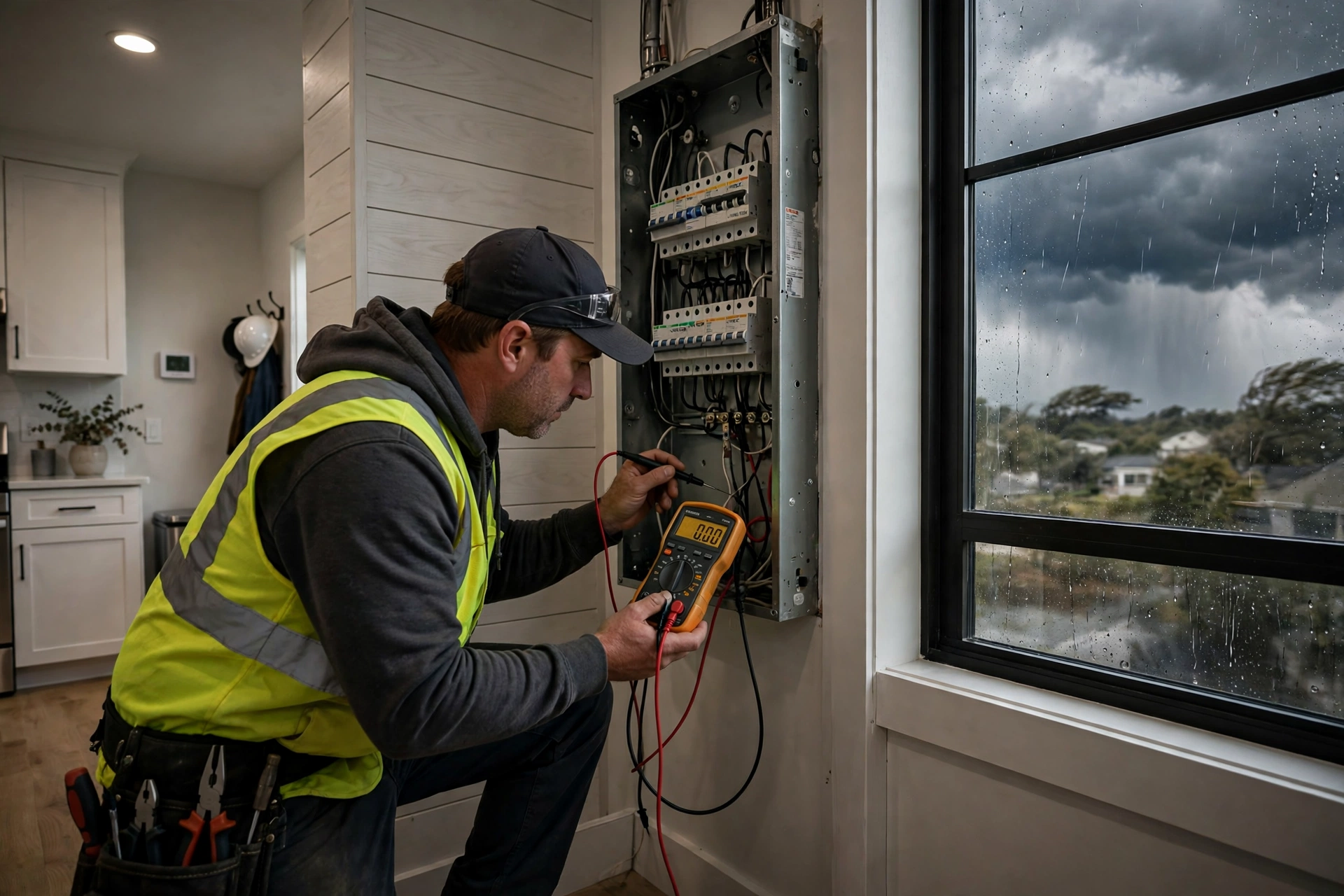
A typical visit starts with an inspection of the panel and a short conversation about the home: how old the wiring is, what equipment matters most, and whether surges have already caused trouble. The electrician then confirms the right unit, mounts it at the panel, wires it in, and tests it.
Before the work begins, ask for an upfront written quote that covers the device and the installation, and ask what warranty covers the unit itself. A reputable installer is happy to put the details in writing and explain what the warranty does and does not cover.
After installation, keep an eye on the unit’s indicator lights. If they ever show that protection has been lost, call an electrician to have the unit checked — a protector that has done its job once may not be ready for the next storm.
Frequently Asked Questions
Does a whole-home surge protector replace power strips?
No. The panel unit is a first line of defense for the whole house, and point-of-use strips still add a useful second layer for sensitive electronics like computers and home theater gear.
Will it protect against a direct lightning strike?
No device can guarantee protection from a direct strike. A whole-home protector is designed to handle the far more common surges from nearby strikes, utility switching, and power restoration.
How long does a whole-home surge protector last?
It depends on how many surges it absorbs. A unit that takes a large hit may need replacing sooner, which is why indicator lights matter. An electrician can check the unit during a routine visit.
Can it be installed in any home?
Most homes with a standard panel can have one installed, but the panel needs available space and must be in safe condition. A licensed electrician can confirm this with a quick inspection.
Do I need a permit in Orlando?
Electrical work at the panel generally falls under local permitting rules. A licensed electrician handles the permit side of the job and makes sure the work meets code.
When to Call an Electrician
If storms have already cost you an appliance or two, if your panel is older, or if you simply want a first line of defense before the next thunderstorm season, it is worth a conversation with a licensed electrician. Whole-home surge protection is one of those upgrades that quietly does its job — until the day it saves a refrigerator, a computer, or a home office full of gear.
Need help now? Call Now and we’ll connect you with an independent local pro in your area. You can also reach out through the contact page to find a licensed electrician near Orlando, FL.